
How to Help Siblings Adjust to New Baby Life

Bringing home a new baby is full of sweetness. Tiny fingers. Sleepy snuggles. That fresh newborn smell that makes the sleeplessness worth it. But if you already have a child at home, the transition can feel a little wobbly, too.
Have you noticed that your toddler suddenly wants to be carried everywhere? Or maybe your preschooler is thrilled one minute and tearful the next. Maybe your older child seems uninterested, clingy, jealous, or extra sensitive in ways you didn’t expect.
First, take a deep breath, and know that this is normal.
Learning how to help siblings adjust to new-baby life is not about creating a perfect “big brother” or “big sister” moment right away, but rather a process that gives your child time, reassurance, and small ways to feel secure as your family changes. Just as close friendships can’t be forced or hurried, expect sibling bonds to develop over time—and this is just the introduction stage.
Start Talking About the Baby Before Baby Arrives
Kids do better with change when they have time to warm up to the idea (even if they aren’t old enough to fully understand what’s coming). You don’t need a big formal conversation. Keep it simple and repeat it often.
You might say:
“Baby will come live with us soon. Babies cry, eat, sleep, and need lots of help.”
That may sound obvious to us, but it’s helpful for little ones. Sometimes kids imagine a built-in playmate arriving at the door. Then the baby comes home and mostly sleeps, cries, and needs mom or dad. Setting realistic expectations can soften the surprise.
Read books about becoming a sibling. Let your child help choose a blanket, point to baby clothes, or talk to your belly if they want to. If they don’t want to participate or just aren’t feeling it, that’s okay too.
Keep Their World as Familiar as Possible
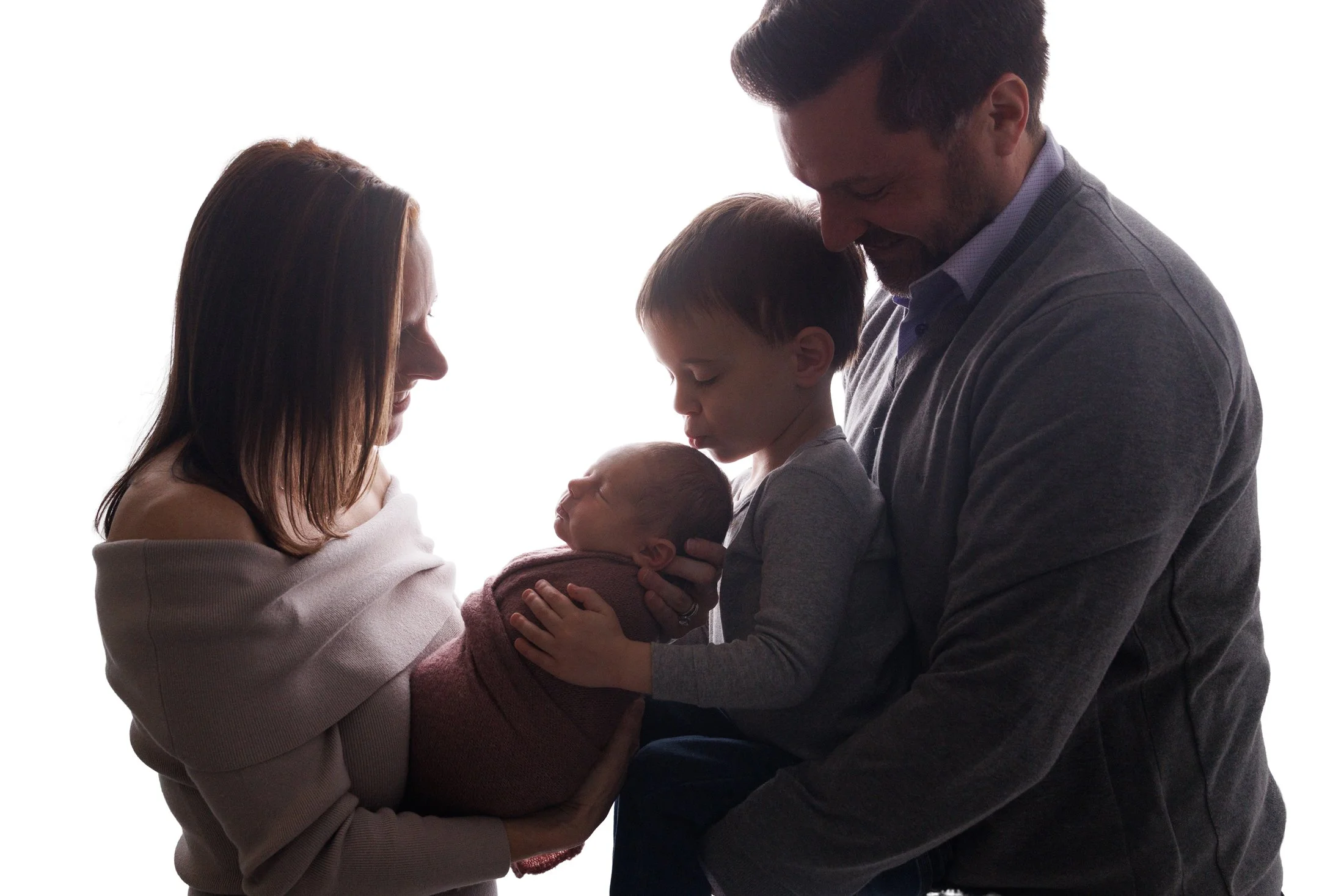
As you already know, a new baby changes so much at once. If your older child is switching rooms, starting school, potty training, or giving up a crib, try to make those changes well before the baby arrives or give them some time after.
Of course, life doesn’t always cooperate. Sometimes everything happens at once because that’s just how parenting goes. But when possible, protect the little routines that help your child feel safe.
Repeat a favorite bedtime song. Make pancakes on Saturdays. Prioritize an intentional school drop-off hug. Block out ten minutes of reading in the same cozy spot.
These tiny anchors remind your child, “Our family is changing, but you are still held here.”
Expect Big Feelings and Small Regressions
When families ask how to help siblings adjust to new-baby life, one of the biggest surprises is how emotional the transition can be.
Your child may act (much) younger for a while. They may want a bottle again, ask to be rocked, have more accidents, wake at night, or need extra help with things they used to do independently.
This doesn’t mean you did anything wrong. It often means they’re asking, in their own little way, “Do you still see me? Am I still your baby, too?”
Try to respond with reassurance when you can:
“Do you want to sit with me? I can do that for a few minutes.”
“Are you having a hard time right now? I’m here.”
You can still keep boundaries, but lead with connection first. They’re not trying to make things harder. They’re just trying to find their place again.

Give Them a Job, But Not a Responsibility
Kids love to feel needed, but they should not feel responsible for the baby. There’s a big difference.
Some special, confidence-building jobs might be:
· Bringing a diaper
· Choosing baby’s pajamas
· Singing a song during tummy time
· Picking a book for you to read near the baby
· Helping tell visitors, “This is my baby brother!”
Keep the jobs optional and low-pressure. If they don’t want to help, don’t force it. A sibling bond grows best when it has room to breathe.
And when they do help, notice it.
“You were so gentle with her feet.”
“He looked right at you when you sang that song.”
“You helped me so much by bringing that burp cloth.”
“Thank you for showing her your favorite toy. I know it’s special to you.”
Tiny praise goes a long way.
Protect One-on-One Time
Quality time does not need to be fancy. Truly.
One-on-one time might be five minutes on the floor with building blocks while the baby naps. It might be a Target pickup run with dad. Or it could be snuggling in bed and asking about their favorite part of the day.
The goal is not quantity but consistency.
Try giving the time a name: “Mommy and Jack time” or “our special book time.” Even a small ritual can help your child feel like they still have a place that belongs just to them.
And if you’re in the thick of newborn life and barely keeping your eyes open, please don’t add guilt to the list. Some days, the one-on-one time may be a kiss on the forehead and a whispered, “I love being your mom,” followed by other little “touches” like that throughout the day. That counts.

Let Visitors Love on the Big Kid, Too
When people come over, the baby usually gets all the attention. Understandably. New babies are irresistible.
But older siblings notice.
If you can, ask grandparents, friends, or visitors to greet the older child first. Let them ask about school, a favorite toy, or the drawing taped to the fridge before rushing straight to the baby.
You can also keep a few “big kid” snacks, stickers, or small activities nearby for those early visits. Nothing over the top. Just something that says, “You’re special here, too.”
Be Gentle Around Baby Talk
It’s tempting to say things like, “You’re the big kid now!” And sometimes that feels exciting. But for some children, being the big kid can feel like a demotion.
They may wonder, “Does that mean I don’t get cuddles? Do I have to be grown up now?”
Try balancing big-sibling praise with reminders that they are still little and loved.
“You are such a sweet big sister, and you’re still my baby, too.”
That sentence alone can soften so much.
Make Room for a Real Bond, Not a Perfect One
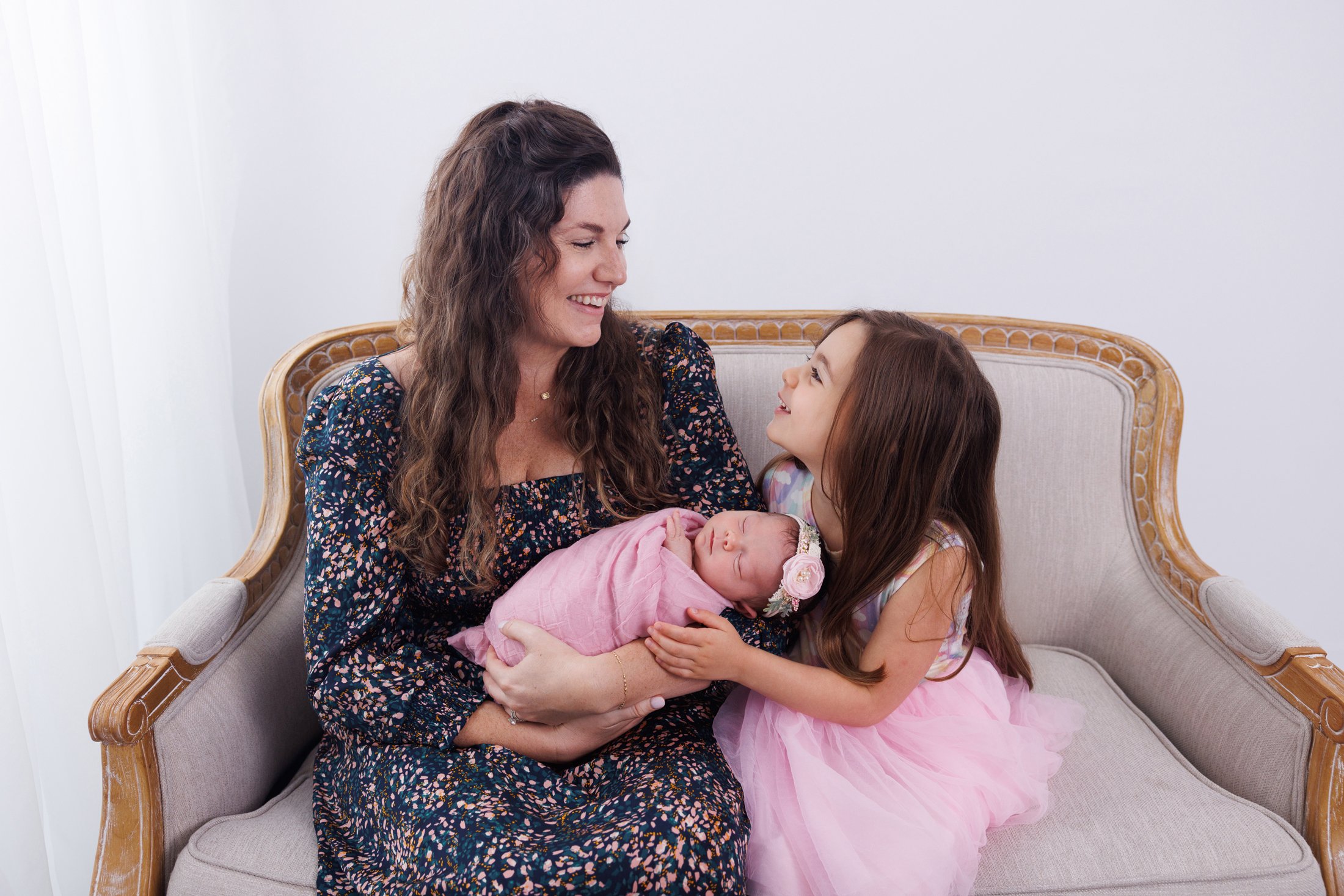
Sibling love doesn’t always begin with a magical first meeting. Sometimes it starts with curiosity and awe. Sometimes indifference. Sometimes tears. And sometimes all of those things at once.
That’s okay.
The goal is not to force instant affection but to create a safe, loving environment where connection can grow.
Over time, you’ll start to see it. A little hand reaching for the baby’s toes or carefully putting a paci back in. A proud smile when the baby turns toward their voice. A giggle when the baby sneezes. A quiet moment on the couch when everyone is piled together and, for a second, it all feels real in the best way. Those fleeting moments reveal a lot.
Your family doesn’t have to adjust perfectly (none do). Just move through the transition together, with lots of grace, for yourself and each other.
Houston Heights Newborn & Family Photographer
As a Houston newborn and family photographer, I love watching families grow in these tender, real-life chapters. The newborn season can feel blurry when you’re living it, especially with older siblings in the mix, but these are the moments you’ll want to remember.
The tiny baby. The proud big sibling. The little in-between cuddles. The beautiful chaos of becoming a new version of your family.
If you’re ready to document this season, I’d love to help you create soft, simple, heartfelt photos of your growing family.
Let’s make some memories.
Find more family and newborn photography inspiration on Instagram @littlebranchphotographyhouston.